
 By hassantariq
Hair loss is one of the most common concerns men face — yet it’s also one of the most misunderstood. If you’re noticing thinning hair, a receding hairline, or bald spots, you’re not alone. Hair loss in men affects the majority of men at some point in life, but the good news is that understanding the cause and stage can make a huge difference in outcomes.
In this guide, we’ll clearly explain the causes of hair loss in men, the different stages of male pattern baldness, and — most importantly — what actually works according to real medical evidence. This article also answers popular searches such as why men lose hair, stages of male pattern baldness, how to stop hair loss in men, best treatment for hair loss in men, and does hair loss in men reverse.
What Is Hair Loss in Men?
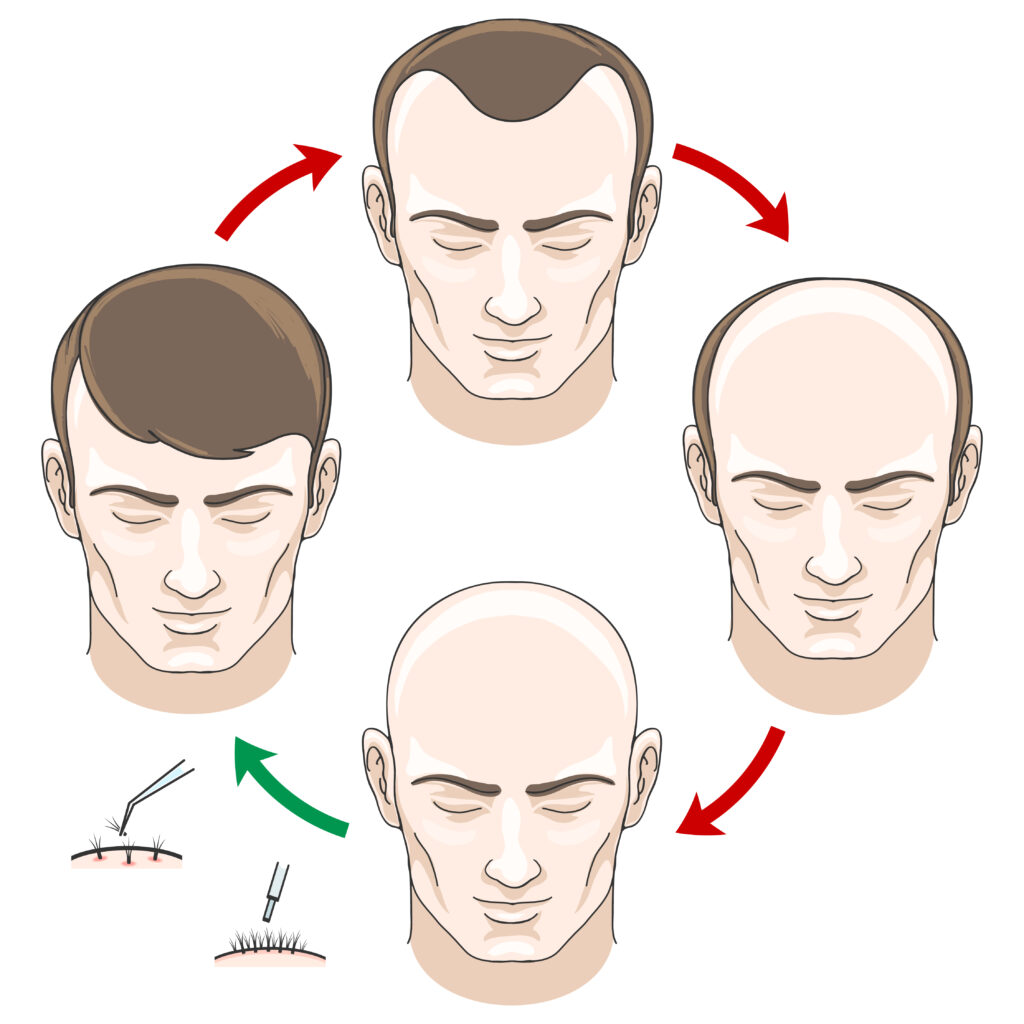
Hair loss in men most commonly refers to androgenetic alopecia, also known as male pattern baldness. It is a genetic and hormonal condition — not a hygiene issue, vitamin deficiency (in most cases), or something you caused.
Hair follicles gradually shrink over time, producing thinner, weaker hair until growth stops completely.
Main Causes of Hair Loss in Men
Understanding the cause is the foundation of choosing the right treatment.
1. Genetics (Primary Cause)
If hair loss runs in your family, your risk is significantly higher.
• Inherited from either parent
• Follicles become sensitive to DHT
• Hair growth cycle shortens
Genetics determine when hair loss starts, how fast it progresses, and which areas are affected.
2. DHT Hormone Sensitivity
DHT (dihydrotestosterone) is a byproduct of testosterone.
What DHT does:
• Shrinks hair follicles
• Shortens growth phase
• Causes thinning at temples and crown
Men with genetically sensitive follicles experience progressive hair loss even with normal testosterone levels.
3. Aging
Hair growth naturally slows with age.
• Reduced follicle activity
• Slower regeneration
• Less dense hair
However, severe or early hair loss is not just aging — it’s usually genetic baldness.
4. Stress and Illness (Temporary Hair Loss)
Stress can trigger a condition called telogen effluvium.
• Sudden hair shedding
• Often reversible
• Triggered by illness, surgery, emotional stress
This is different from male pattern baldness and often resolves within months.
5. Nutrient Deficiencies (Less Common but Important)
Deficiencies may worsen hair shedding.
• Iron
• Zinc
• Vitamin D
• Protein
Correcting deficiencies improves hair quality but usually does not stop genetic hair loss.

Stages of Hair Loss in Men (Norwood Scale Explained)
Hair loss progresses in predictable patterns.
Stage 1: No Significant Hair Loss
• Normal hairline
• No visible thinning
• Ideal time for prevention
Stage 2: Early Receding Hairline
• Slight recession at temples
• Hairline forms a subtle “M” shape
This is often when men first notice hair loss.
Stage 3: Noticeable Hair Loss
• Deeper temple recession
• Thinning at crown may begin
This is the best stage to start treatment for visible results.
Stage 4: Advanced Thinning
• Significant recession
• Clear crown thinning
• Scalp becomes visible
Treatment can slow loss but regrowth is limited.
Stage 5–7: Severe Baldness
• Large bald areas
• Remaining hair only on sides/back
At this stage, hair transplant is usually the most effective option.
What Actually Works for Hair Loss in Men (Evidence-Based)
Let’s separate facts from marketing hype.
1. Minoxidil (Topical Treatment)
Minoxidil is FDA-approved and widely used.
How it works:
• Increases blood flow to follicles
• Prolongs growth phase
• Stimulates weak follicles
Results:
• Best for crown thinning
• Requires daily use
• Results visible in 3–6 months
Minoxidil helps slow hair loss and regrow some hair, but does not cure baldness.
2. Finasteride (DHT Blocker)
Finasteride is the most effective medical treatment for male pattern baldness.
How it works:
• Reduces DHT levels
• Protects follicles
• Slows or stops hair loss
Key facts:
• Prescription medication
• Works best in early stages
• Must be taken long-term
This treatment is central when discussing what actually works for hair loss in men.
3. Combination Therapy (Best Results)
Using minoxidil and finasteride together provides superior outcomes.
• One stimulates growth
• One prevents further loss
• Gold-standard approach
Most dermatologists recommend combination therapy.
4. Low-Level Laser Therapy (LLLT)
Laser devices stimulate follicles using red light.
• Improves hair thickness
• Non-invasive
• Works best with other treatments
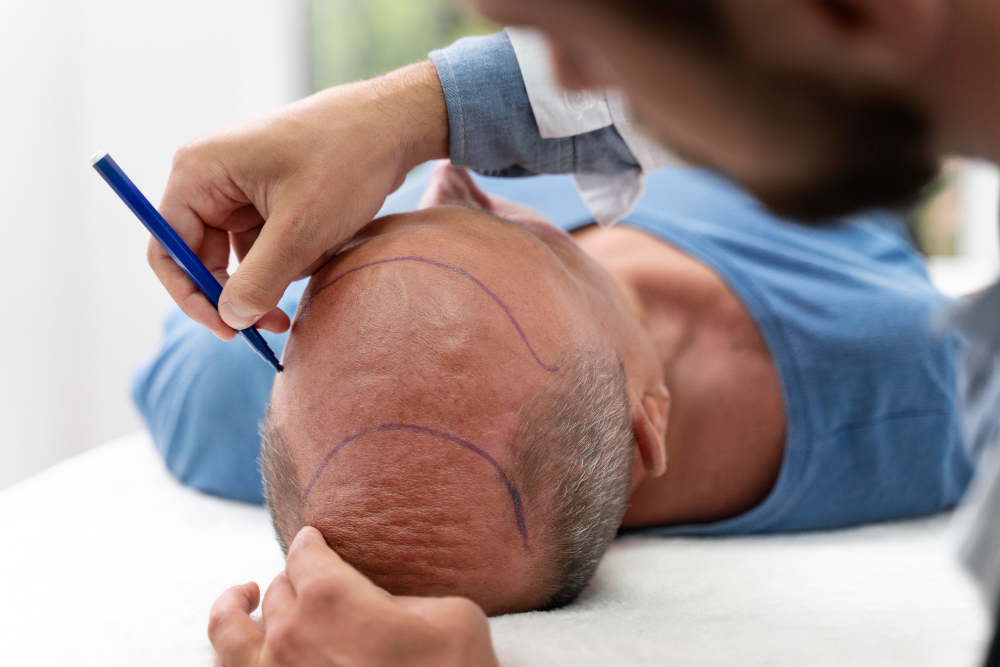
5. Hair Transplant Surgery
For advanced hair loss, surgery may be the best option.
• Permanent results
• Natural appearance when done properly
• Requires maintenance therapy afterward
Treatments That Do NOT Work (Be Careful)
Avoid wasting money on:
• Hair growth shampoos alone
• Oils claiming full regrowth
• Supplements without deficiency
• “Herbal cures”
• Scalp massages alone
These may improve hair feel, but do not stop male pattern baldness.
Can Hair Loss in Men Be Reversed?
It depends on the stage.
• Early stages → partial regrowth possible
• Moderate stages → slowing + maintenance
• Advanced stages → transplant required
Early action leads to the best outcomes.
Lifestyle Habits That Support Hair Health
While lifestyle changes won’t cure genetic hair loss, they help support treatment.
• Adequate sleep
• Stress management
• Balanced nutrition
• Avoid smoking
• Regular exercise
Healthy habits protect existing hair.
When to See a Doctor
Consult a professional if:
• Hair loss is rapid or patchy
• Scalp pain or itching exists
• Hair loss begins very young
• You want prescription treatment
Early diagnosis expands treatment options.
FAQs: Hair Loss in Men
1. What is the main cause of hair loss in men?
Genetics and sensitivity to DHT hormone are the primary causes.
2. At what age does hair loss start in men?
It can start as early as the late teens or early 20s, but progression varies.
3. What actually works for hair loss in men?
Finasteride and minoxidil are the most proven treatments.
4. Can hair loss in men grow back naturally?
Stress-related hair loss can recover. Genetic baldness usually requires treatment.
5. Is hair loss permanent?
Untreated male pattern baldness is permanent, but progression can be slowed or stopped.
Conclusion & CTA
Hair loss in men is common — but ignoring it is optional. By understanding the causes, recognizing the stage, and choosing treatments that actually work, you can take control early and protect your hair long-term.
If this guide helped you, share it with someone dealing with hair loss, leave a comment, or explore more men’s health content on this blog.
#hairloss #menshealth #malepatternbaldness #haircare #balding #hairgrowth #healthguide #wellness
With care,
Hassan Tariq
Founder of IdeasBlooming