
 By hassantariq
If you want to get stronger, move better, and stay flexible without going to a gym, you’re not alone. Many people search for the best home workouts for strength & flexibility because they want simple, effective routines that fit into daily life.
The good news? Research shows you don’t need expensive equipment to build strength and improve mobility. With bodyweight exercises and consistent stretching, you can support muscle growth, joint health, and overall fitness safely at home.
This guide explains evidence-based home workouts that improve both strength and flexibility — without complicated programs.
Why Combine Strength and Flexibility?
Many workout plans focus only on strength or only on stretching. But combining both offers better long-term results.
According to research published in medical exercise journals:
- Strength training improves muscle mass and metabolic health
- Flexibility training supports joint mobility and injury prevention
- Combined programs enhance overall physical function
Major health organizations recommend both resistance training and mobility exercises for balanced fitness.
What Are the Best Home Workouts for Strength & Flexibility?
Let’s break it down into two key parts:
- Strength-focused bodyweight training
- Flexibility and mobility exercises
Together, they form a complete at-home fitness routine.
Part 1: Strength Training at Home
Strength training builds lean muscle and improves endurance. Clinical studies suggest bodyweight exercises can significantly increase strength when performed consistently.
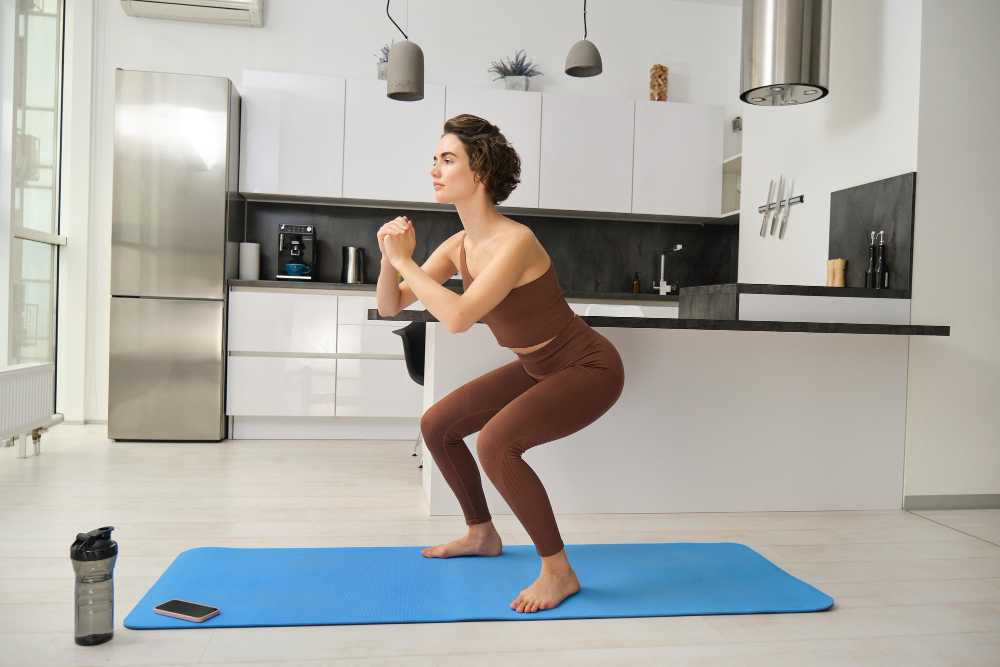
1️⃣ Bodyweight Squats
Targets: Legs, glutes, core
Reps: 12–15
Sets: 3
Squats activate large muscle groups, increasing overall strength and energy expenditure.
2️⃣ Push-Ups
Targets: Chest, shoulders, triceps, core
Reps: 8–12
Sets: 3
Push-ups engage multiple upper-body muscles while strengthening core stability.
Modification: Perform on knees if needed.
3️⃣ Lunges
Targets: Legs and balance
Reps: 10 per leg
Sets: 3
Lunges improve lower-body strength and coordination.
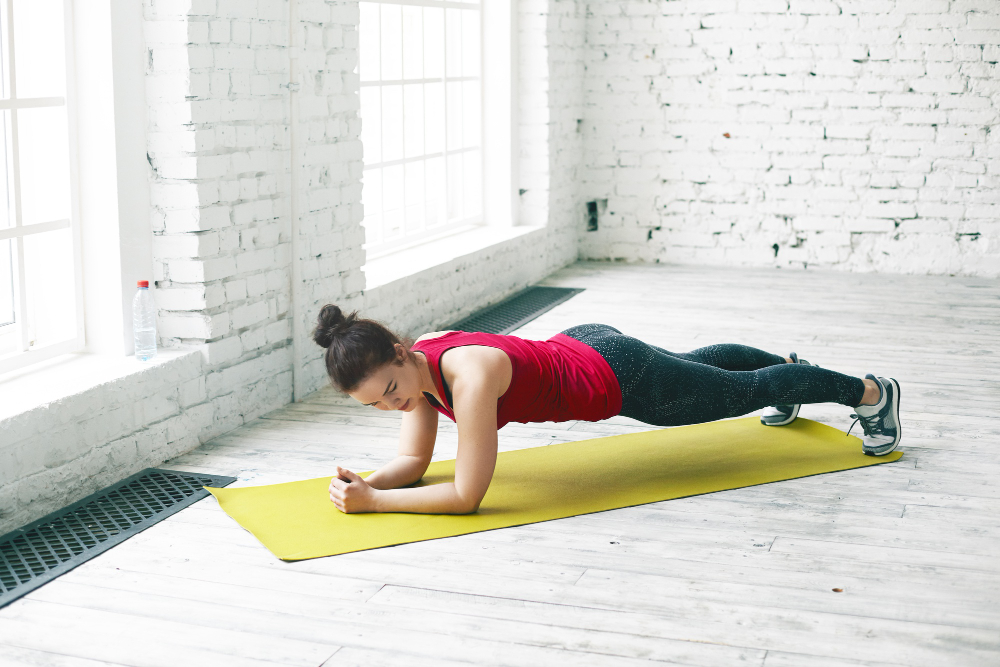
4️⃣ Plank Holds
Targets: Core stabilizers
Time: 20–45 seconds
Core stability plays a key role in posture and injury prevention.
Strength Training Benefits (Quick Summary)
| Benefit | Why It Matters |
|---|---|
| Muscle growth | Supports metabolism |
| Bone strength | Helps long-term mobility |
| Core stability | Improves posture |
Part 2: Flexibility & Mobility Exercises
Flexibility training supports muscle recovery and joint health.
According to a systematic review in sports medicine research, regular stretching improves range of motion and functional mobility.
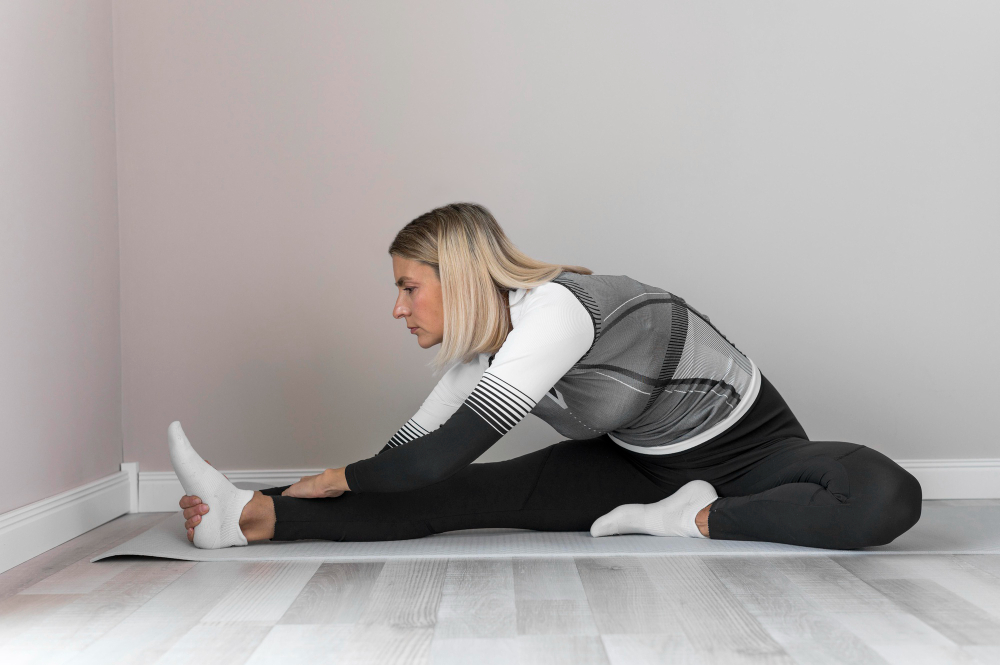
5️⃣ Forward Fold Stretch
- Stretches hamstrings and lower back
- Hold 20–30 seconds
Improves posterior chain flexibility.
6️⃣ Cat-Cow Stretch
- Improves spinal mobility
- Repeat 8–10 slow repetitions
Supports back health and posture.
7️⃣ Hip Flexor Stretch
- Helps reduce tight hips from sitting
- Hold 20–30 seconds per side
Sedentary lifestyles often cause hip tightness.
Strength vs Flexibility: Why You Need Both
| Training Type | Improves Muscle | Improves Mobility | Reduces Injury Risk |
|---|---|---|---|
| Strength | ✔ | Moderate | ✔ |
| Stretching | Minimal | ✔✔ | ✔ |
| Combined Routine | ✔✔ | ✔✔ | ✔✔ |
Balanced routines support long-term movement quality.
Sample Weekly Home Workout Plan
Monday: Strength (Squats, Push-Ups, Planks)
Tuesday: Flexibility Session (20 minutes stretching)
Wednesday: Strength (Lunges + Core)
Thursday: Rest or Light Mobility
Friday: Full Body Strength
Weekend: Gentle stretching or yoga
Internal link placeholders:
- Use our BMI calculator to track progress
- Read our full body workout plan for beginners
- Explore our healthy lifestyle guide for daily fitness habits
- Check our nutrition guide for muscle recovery
How Long Until You See Results?
Research suggests:
- Strength improvements: 3–4 weeks
- Improved flexibility: 2–6 weeks
- Visible physical changes: 6–12 weeks
Consistency matters more than intensity.
Safety Tips for Home Workouts
To stay safe:
- Warm up 5–10 minutes
- Focus on form over speed
- Avoid sudden movements
- Rest if experiencing pain
According to clinical studies, proper recovery supports long-term strength development.
Do You Need Equipment?
No. The best home workouts for strength & flexibility rely primarily on bodyweight.
Optional additions:
- Resistance bands
- Yoga mat
- Light dumbbells
These can increase intensity but are not required.
Frequently Asked Questions
What are the best home workouts for strength & flexibility without equipment?
Bodyweight squats, push-ups, lunges, planks, and mobility stretches create a balanced routine without equipment.
How often should I train at home?
Most guidelines recommend strength training at least 2–3 times per week and stretching regularly.
Can beginners follow this routine?
Yes. Adjust repetitions and intensity according to fitness level.
Does flexibility training build muscle?
Stretching supports mobility but does not significantly increase muscle mass.
Is it safe to work out at home every day?
Alternating strength and mobility days allows recovery and reduces injury risk.
Final Thoughts
The best home workouts for strength & flexibility are simple, structured, and consistent. You don’t need a gym to build muscle, improve mobility, or support long-term health.
Focus on:
- Progressive strength training
- Regular stretching
- Proper recovery
- Sustainable habits
Over time, these balanced workouts can improve overall fitness safely and effectively.
#HomeWorkout #StrengthTraining #Flexibility #FitnessAtHome #HealthyLiving
With care,
Hassan Tariq
Founder of IdeasBlooming